




SaaS Customer Retention Strategies: How to Reduce Churn in 2026


Why should SaaS marketers focus on retention metrics like churn rate? The truth is that SaaS customer retention has become a key driver of business success nowadays. ChartMogul research, for example, has shown that for enterprises in the SaaS industry, acquiring a new audience has become a much harder task. Retention is now becoming critical for long-term, sustainable growth, as the study showed companies with $15M–30M+ annual recurring revenue (ARR) were seeing 40% of their growth driven by expansion in 2024, up from 30% in early 2021.
And the stakes keep getting higher, as it was also shown that the median company with ≥100% NRR grows 48% year-over-year, nearly double the pace of peers in lower NRR ranges. As such, we can see that having a SaaS retention strategy in place is becoming an important part of business growth. For this reason, we decided to dedicate this article to dissecting the most tried-and-proven customer retention strategies for SaaS companies. Make sure to read till the end, as we also included a free downtime email communication template for you to follow during crisis management.
SaaS Retention Metrics: Benchmarks & Calculations
Before we dig into the SaaS customer retention strategies, let’s first outline the most important metrics that can show whether your business efforts are working or not.
- SaaS Retention Rate – a general percentage of customers that remain with your business over a certain time frame.
- Net revenue retention (NRR) – represents the percentage of profits saved over a certain period. This metric can help businesses see whether their current audience is growing or getting smaller. It also takes into account upgrades, churn, and downgrades.
- Gross Revenue Retention (GRR) – is a general measure of the amount of retained revenue (in %), without factoring for expansion revenue, but counting in churn and downgrades.
- Customer Lifetime Value (CLTV or CLV) – indicates the total revenue a single customer brings over the entire course of the relationship with your business.
- Customer churn rate – measures the percentage of customers who stop using your products or cancel their subscriptions within a certain period (in relation to your overall customer base).
There are also some other essential customer satisfaction metrics that might indicate whether you are maximizing the potential of your audience. These include:
- The renewal rate, which basically shows how many customers have renewed the subscription with your product. If the renewal rate is anything below 50% this may signal that the customers are experiencing issues with your platform.
- Another important data point to consider is Net Promoter Score (NPS), as it shows how likely the customers are to recommend your business. And as all modern companies should know, there’s nothing more powerful for driving new sales than a word-of-mouth promotion.
- The third metric to pay close attention to when working on SaaS retention rates is the Customer Effort Score (CES). This metric reflects how easy it is for customers to purchase, use your product, and interact with your business overall. Like NPS, CES is typically measured on a Likert scale of either 1–5 or 1–7, where 1 means “very easy” and 5 (or 7) means “very hard.” Because the scale can vary, there aren’t standard industry benchmarks to aim for, but as a rule of thumb, the lower your score, the better.
How to Calculate Your Retention Rate
Above, we have outlined all the metrics that can be used as markers for customer retention, so now, let’s talk about the SaaS retention rate itself. As we said, this measure represents the overall percentage of clients staying with your business.
How to calculate retention rate for SaaS, then? To do this, you need to first specify the time period over which you want to find the rate of retention. Then the formula goes pretty simple:
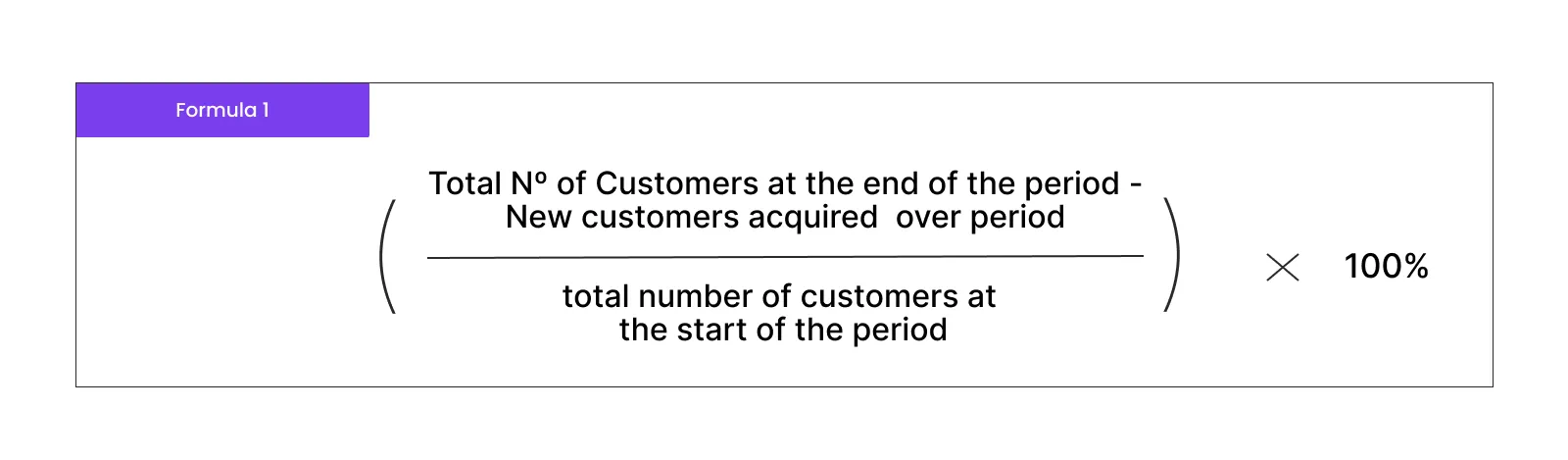
Example: Let’s say your SaaS business starts Q1 with 1,000 customers. By the end of the quarter, you have 1,050 customers in total. During that quarter, you also acquired 200 new customers. To get the overall RR, you just need to fit the numbers into the formula:
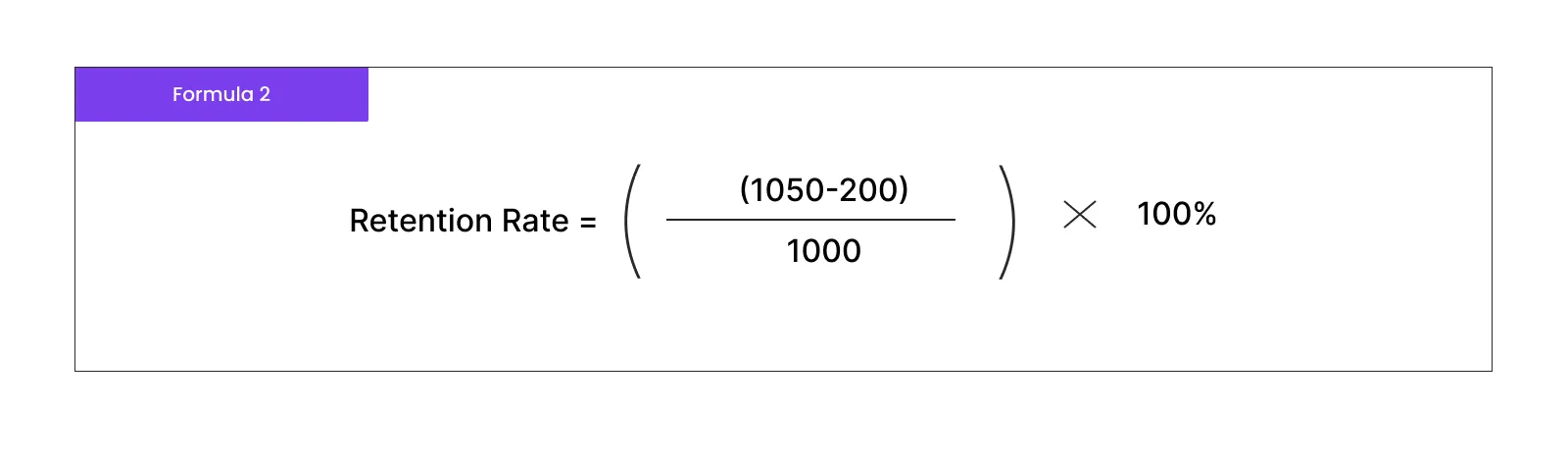
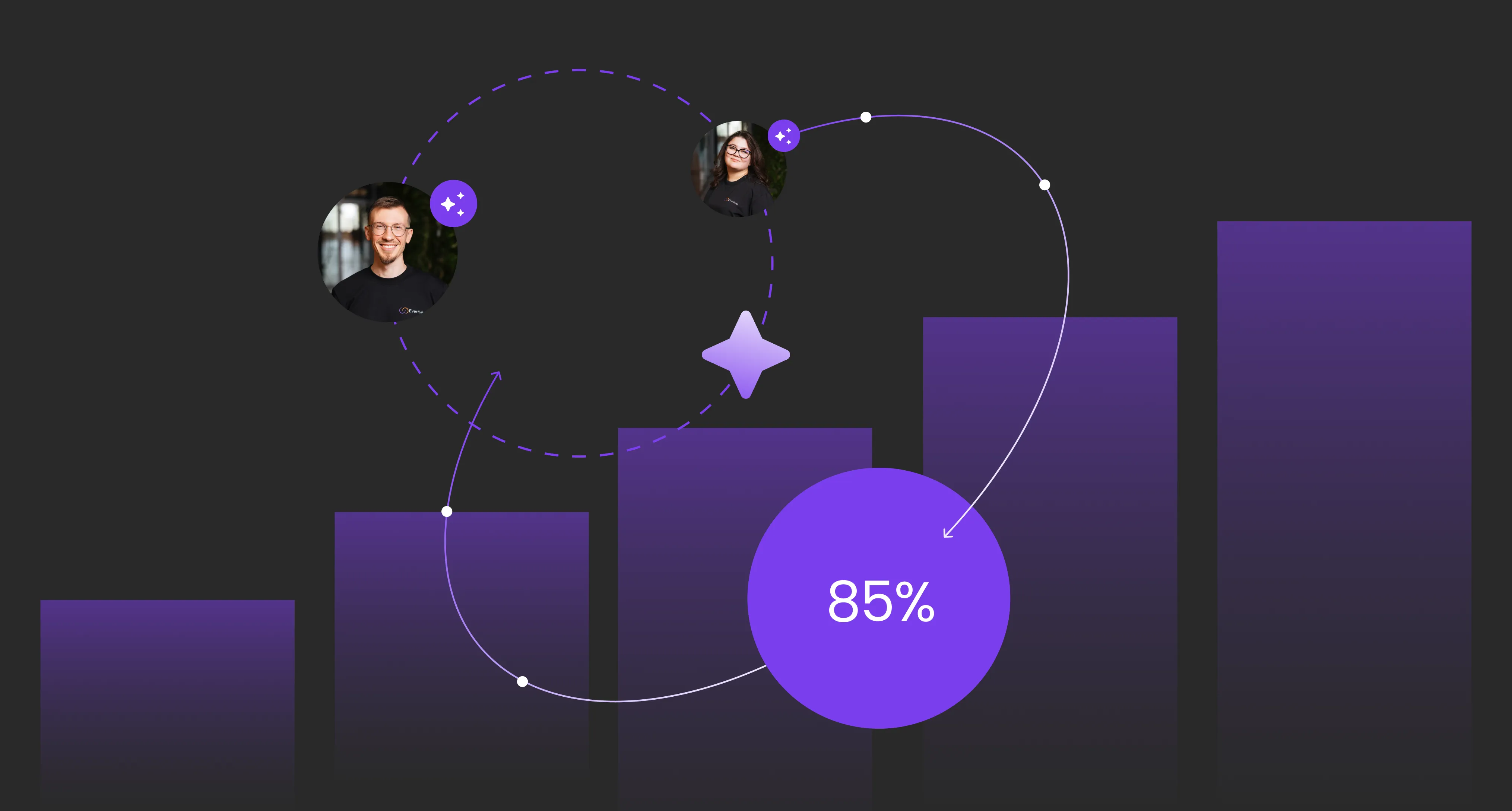
If you do the SaaS retention rate calculation correctly, you will get the quarterly RR of 85%. This means that 85% of your customers from the beginning of the quarter stayed with you by the end of it.
What is a Good SaaS Retention Rate?
As any business owner, you are probably wondering, what is considered a good retention rate for SaaS? First things first, let’s distinguish between B2B and B2C SaaS for this.
For B2B SaaS companies, a SaaS retention rate benchmark would be 85-95% annually. For B2C businesses, on the other hand, this rate is much lower, ranging from 60% to 80% annually. This is true especially for those products with lower average revenue per account (ARPA), and below you will see that this metric also influences other retention data. However, if your company is in the higher quartile, then you might expect to hit around 70-80% retention. Yet, the situation will still largely depend on your product-market fit and the extent of your customers’ loyalty.
B2B vs. B2C Retention Benchmarks
We have dealt with the retention rate, so let’s move on to figuring out which benchmarks to strive for in other metrics. We have analyzed the data collected by ChartMogul, SaaS Capital, Finevra, Vitally, and Tech Crunch, and created the table chart of B2C and B2B SaaS retention rate metrics’ benchmarks for your convenience:
Of course, these benchmarks are more of a general tendency, and businesses of any kind are always recommended to aim higher than the SaaS retention rate average metrics. However, what this table chart clearly shows is that in the B2C market, reaching higher revenue retention rates is much more difficult. This is usually explained by the fact that, overall, this market has a lower ARPA (average revenue per account) on average compared to its B2B counterparts, and ARPA is one of the strongest predictors of retention.
How your business operates often depends on your ARPA band: sales cycle length, contract terms, discounting, onboarding, customer support, and even retention strategies all scale with it. The higher the ARPA, the higher the NRR. According to the same research by TechCrunch, companies with an ARPA of less than $10 per month reach only a top-quartile net retention rate of 65.1%, while those with ARPA above $500 per month (or an Annual Contract Value greater than $6,000) achieve top-quartile retention of 109.3%. This contrast helps explain why B2C retention lags behind B2B in retention.
{{cta}}
Why Retention Metrics Are Non-Negotiable
Some may believe that retention metrics are just technical data points with little to say about the relationship between a business and its audience. But this couldn’t be further from the truth. SaaS retention rates and the related benchmarks are clear indicators of how well your company keeps customers engaged. Strong retention is only possible if you listen to your users, understand their needs, and adapt your product to meet their expectations.
Research consistently shows that retention is one of the most powerful levers for growth. Fred Reichheld, in his study of finance companies, found that a mere 5% increase in customer retention can drive profit growth of 25% to 95%, since returning customers spend more and often refer to new ones. Saravana Kumar, Founder & CEO of Kovai.co, has also highlighted that in SaaS, acquiring a new customer can cost four to five times more than retaining an existing one.
Beyond cost savings, SaaS customer retention metrics signal whether customers are truly finding value in your product: renewing subscriptions, upgrading plans, and even advocating for your brand. With this in mind, it’s clear that tracking retention metrics is necessary. Not only can they directly increase profits, but they also help you:
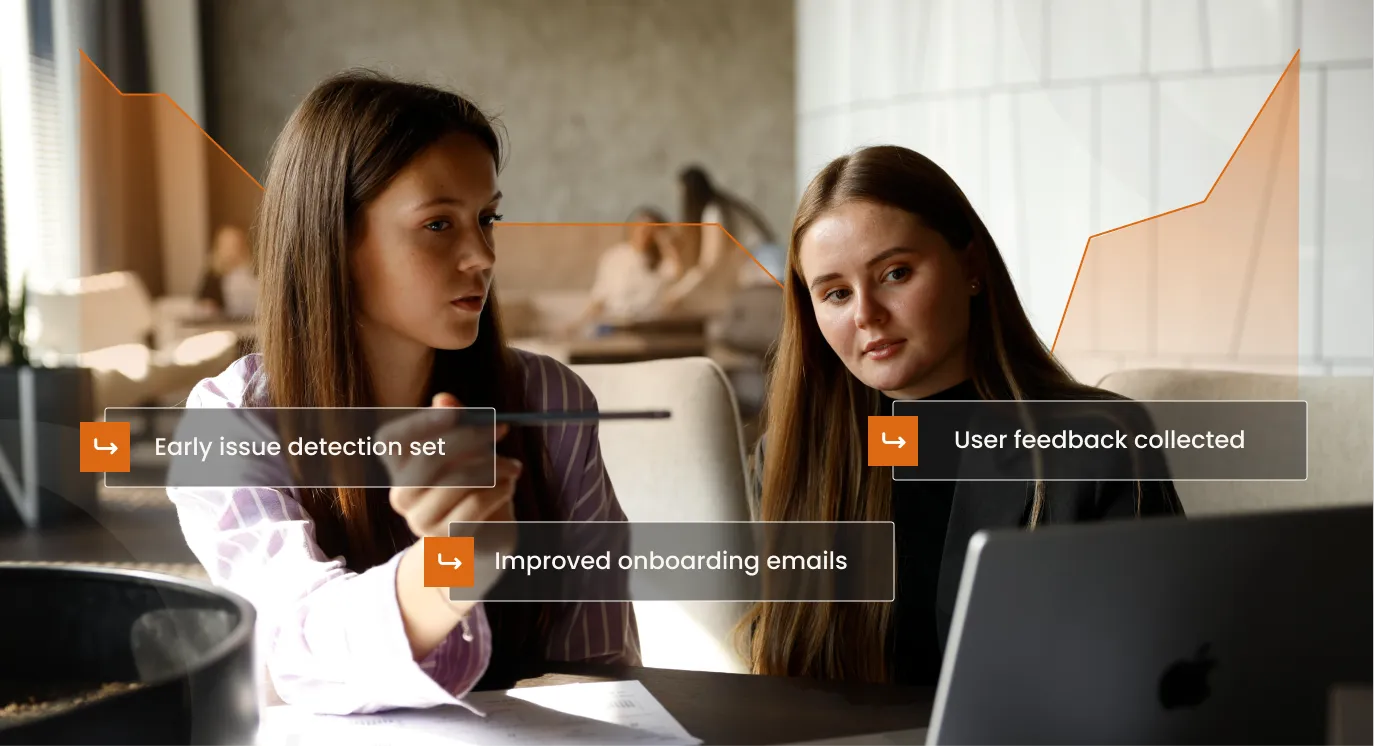
- Diagnose product issues early
- Validate product–market fit
- Shape your product development strategy
- Strengthen customer loyalty
- Boost referrals
SaaS Customer Retention Strategies That Actually Work
Now let's talk about actual SaaS customer retention strategies. You will face choice of a great variety of them, so we tried to focus on the most important ones that can be applied to any SaaS product.
Proactive Customer Support
According to Gartner, proactive customer service results in a full percentage point increase in Net Promoter Score (NPS). Proactive support means anticipating and addressing customer needs before they become problems. This includes reaching out to customers who may be experiencing difficulties, providing resources and guidance when customers are using new or complex features, and identifying and resolving potential issues before they lead to customer churn. Proactive support can help improve customer satisfaction, reduce the number of support tickets, and build customer loyalty.
Learn more about proactive support in our article on responding to negative reviews to understand what customers truly value.
Utilizing Customer Feedback
Customer feedback is valuable for understanding why customers churn and what can be done to improve retention. SaaS companies should collect and analyze customer feedback, including NPS scores, customer reviews, and support tickets, to identify common themes and pain points. This information can be used to prioritize product improvements and support initiatives that will have the greatest impact on customer retention.
Providing Excellent Customer Support
The role of customer support in SaaS customer retention is enormous. Research by Salesforce indicates that 89% of consumers are more likely to make another purchase after a positive customer service experience. To provide excellent customer support, you can invest in a team of knowledgeable and empathetic support agents, offer multiple support channels (email, chat, phone), provide quick response times, and track and analyze customer support metrics such as response time, resolution time, and customer satisfaction scores.
Additionally, creating a comprehensive knowledge base can empower customers to find answers to common questions on their own, reducing the number of support tickets and improving customer satisfaction.
Localizing Customer Support
Localizing customer support involves tailoring your support processes, content, and resources to meet the specific language and cultural needs of your customers in different regions. You can do this by providing multilingual support, hiring local customer support agents, and creating region-specific help center articles and FAQs. By localizing customer support, you can better serve customers in different markets, improve customer satisfaction, and foster loyalty.
Implementing Loyalty Programs
Loyalty programs can be an effective way to reward and retain your most valuable customers. This can involve offering points for product usage or referrals, providing exclusive discounts or access to new features, or creating a tiered program where customers can unlock additional benefits as they achieve higher levels of engagement or spending. Loyalty programs can incentivize customers to continue using your product and become brand advocates, which can help drive new customer acquisition through word-of-mouth marketing.
SaaS Customer Retention Best Practices
Now that we've covered some effective SaaS customer retention strategies, let's dive into some best practices. These will help you implement your retention strategies effectively.
1. Understanding Your Customers
Retention starts with a deep understanding of your customers: their goals, challenges, and how they use your product. This means creating detailed customer personas, segmenting your customer base, and conducting regular research to understand their evolving needs and preferences. With this knowledge, you can tailor your retention strategies to address the specific needs and preferences of different customer segments, leading to higher satisfaction and loyalty.
2. Regular Communication
Regularly communicating with your customers is essential for staying top-of-mind and keeping them engaged with your product. This includes sending product updates, educational content, and personalized recommendations based on customers' usage patterns. Make sure to provide value in every communication and avoid flooding customers with irrelevant messages.
3. Personalizing the Customer Experience
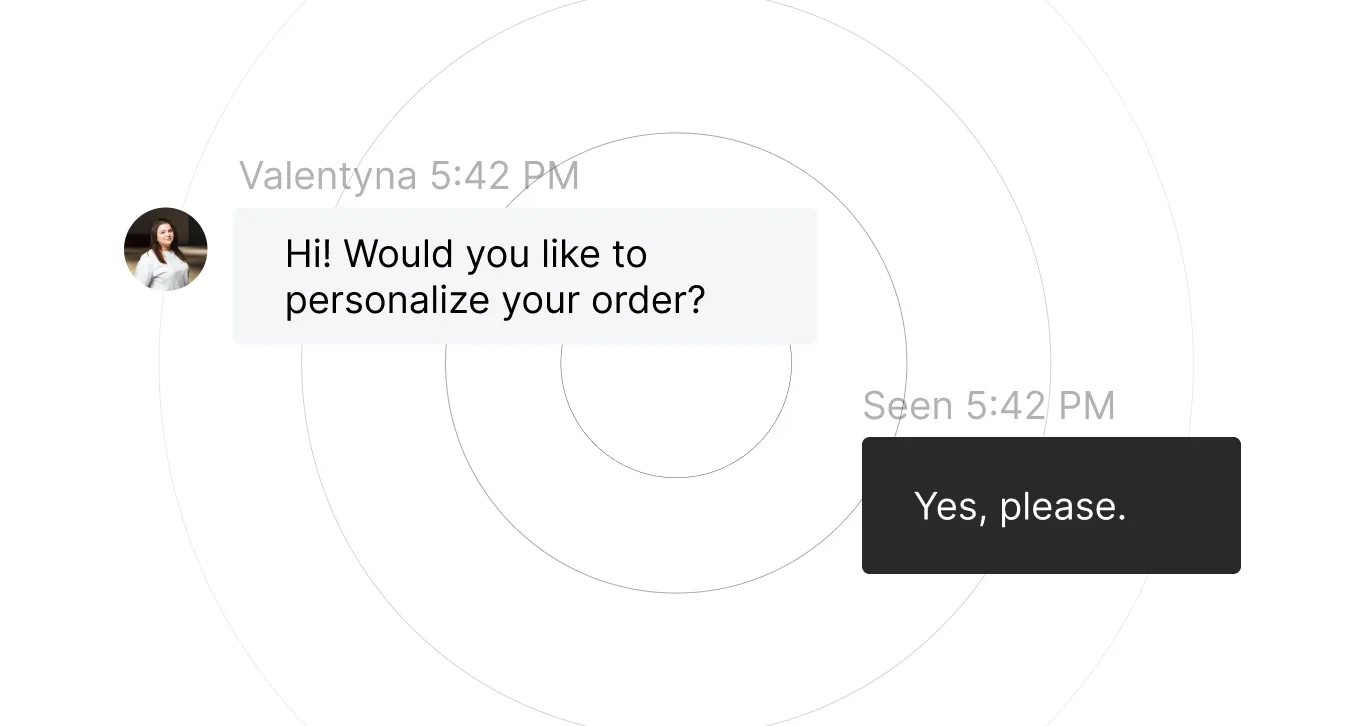
Personalization is a critical component of customer retention in SaaS. Use customer data to tailor product experiences, communications, and support interactions to each customer's unique needs and preferences. This can include personalizing in-app messages, email campaigns, and support interactions to address customers' specific use cases and pain points.
4. Monitoring Customer Health
Implement a customer health score system to monitor the overall well-being of your customer relationships. Track key metrics such as product usage, support ticket frequency, and customer satisfaction scores to identify at-risk customers and take proactive steps to improve their experience. Regularly reviewing customer health data will help you catch potential churn early and take corrective action before customers decide to leave.
5. Continuous Product Improvement
Continuously improving your product based on customer feedback and market trends is essential for retaining customers in the long term. This means staying up-to-date with competitor offerings, tracking customer feedback and feature requests, and prioritizing product improvements that will have the greatest impact on customer satisfaction and retention. By demonstrating a commitment to continuous improvement, you can build trust and loyalty among your customer base.
Drawing The Line
At the end of the day, your customer retention strategy should be focused on more than just keeping users from leaving. Because the true focus should be on building strong brand relationships that make them want to stay. And that should be your number one motivator to pay enough attention to the right metrics, invest in smooth onboarding, be transparent about the existing issues, and continuously engage your users in your brand story. Following these strategies, your business will be able to create an experience that feels reliable and valuable.
Yet, we understand that building a SaaS retention strategy on your own can feel overwhelming. Structuring all the processes to truly work in your favor takes time and expertise. That’s where EverHelp comes in. Our team designs support processes with customer retention in mind. Book a call with us, and we’ll show you exactly how we can strengthen your retention efforts and maximize their impact.
By focusing on how to boost customer retention and loyalty for SaaS product, you’re not only improving day-to-day operations, but also laying the foundation for sustainable growth. Companies that thrive in today’s competitive market are those that can deliver consistent value and build lasting customer loyalty.


Help someone else stay in the know. Hit that share button!




.webp)

.webp)

%20(1).png)





.webp)
.webp)
%20Rate%20Smartly.webp)
.webp)

.webp)



.webp)
.webp)

.webp)