




Zendesk’s Service Culture: The Customer Service Books Behind Success
.webp)

Over 100,000 companies worldwide trust Zendesk to power their support operations. That's not an accident. Behind the platform's success lies a deliberately cultivated customer service culture that treats service as strategy, not sentiment. Zendesk doesn't just build support tools – they live by the principles within them.
This distinction matters. According to Zendesk's own CX Trends data, 73% of consumers will switch to a competitor after multiple bad experiences, while 75% will spend more with businesses that provide good customer experiences. Those numbers show why leading companies define culture as a combination of core values and everyday behaviors, supported by playbooks, knowledge bases, and training that put those values into practice.
At EverHelp as a dedicated support outsourcing partner, service culture is central to how we build and scale support teams for our clients. That’s why we’ve decided to dedicate this article to unpacking the influential customer service books that shaped Zendesk's thinking. Hopefully, this will show that any support organization can translate those ideas into structures, metrics, and habits that customers get drawn to.
The Philosophy Behind Zendesk's Service Culture
Zendesk's approach to customer service culture starts with a simple equation:
Values without behaviors are worthless.
You can post "customer-first" on office walls, but unless agents know what that looks like in a real conversation, those words stay abstract.
“Culture is your organization’s personality. It permeates how people relate to each other, how decisions get made, what work gets done and how, and how it feels to be there.”
- Fidelma Butler, Ex-Vice President of Talent & Organization Development at Zendesk
That's why Zendesk defines service culture as the pairing of stated values with clear examples of acceptable and unacceptable actions. When an agent faces an upset customer, they shouldn't wonder what "empathy" means in practice. They should have playbooks that explicitly lay out listening techniques, de-escalation scripts, and when to escalate versus resolve on the spot.
This operational layer, what Zendesk calls "customer success playbooks," includes:
- Objectives
- Role definitions
- Reference materials
- And step-by-step instructions for common scenarios.
And, on the contrary to what people might think, these playbooks don't constrain creativity. They free agents to focus on the human side (satisfaction and experience) of service by removing ambiguity around process. And research shows, that employees are more engaged when the company culture centers on maximizing customer satisfaction, because it makes their work feel meaningful.
Zendesk’s technology reinforces this philosophy. Their platform centralizes data across channels, so agents never ask customers to repeat themselves. Smart routing directs complex questions to specialists. Self-service tools handle routine inquiries. Every feature basically reflects a belief that reducing user effort builds more customer loyalty than flashy gestures.
A People-First, Customer-First Organization
Zendesk's mission statement is
"We empower our people to be their best selves."
And it reflects their recognition that customer service qualities like empathy, patience, and problem-solving come from supported, well-trained humans.
Inside the company, this means:
- clear career paths for support roles
- collaboration across tiers instead of rigid hierarchies
- and continuous training that goes beyond product knowledge to soft skills.
Externally, it translates to the platform's design philosophy: give agents the context and tools to solve problems without unnecessary transfers, hold times, or friction.
This dual focus, people-first for employees and customer-first for users, echoes core themes from widely cited CX literature:
- Loyalty stems from low-effort experiences.
- Empowered agents deliver better outcomes.
- Emotional connections matter more than transactional perfection.
These aren't abstract principles. It’s supported by data, which shows 81% of shoppers say a positive service experience increases the likelihood they'll purchase again.
{{cta}}
How to Apply These Lessons to Your Business
The philosophies in these books aren’t theoretical, they’re operational blueprints that Zendesk and companies like it have used to build remarkable customer experiences. Here’s how to start applying them.
Build a Self-Service Foundation First
Before scaling your team, invest in reducing unnecessary contact volume. Map your most common ticket types, write clear resolution guides for each, and publish them in an accessible customer support knowledge base. Track deflection rates monthly. Every ticket your knowledge base handles is an agent conversation freed for something more complex.
Hire for Attitude, Train for Skills
Technical knowledge can be taught. Empathy, resilience, and genuine curiosity about customer problems are far harder to develop in someone who doesn’t already have them. Define what“good” looks like in your customer interactions before you write a job description. The Effortless Experience shows that reducing friction matters more than creating delight, which means hiring people who are good at removing obstacles, not just being pleasant.
Empower Agents to Own Outcomes
Agent autonomy correlates directly with customer satisfaction. When agents can resolve issues without escalating to a manager for approval, resolution time drops and satisfaction goes up. Set clear authority boundaries that allow agents to make decisions within defined limits. Measure how often agents escalate unnecessarily, and reduce those barriers over time.
Measure What Drives Loyalty, Not Just Activity
If your dashboards only show handle time and ticket volume, you’re measuring activity, not outcomes. Add first-contact resolution rate, Customer Effort Score, and repeat contact rate to your reporting. These metrics reveal whether customers are actually getting what they need, not just whether agents are staying busy.
Create a Feedback Loop That Improves the System
The companies that get better over time build learning systems. Every significant customer complaint is an opportunity to fix something upstream. Regularly review your most common ticket types, identify root causes, and address them in your product, your documentation, or your processes. The goal is to make the same mistake once, not repeatedly.
What Inspires EverHelp? The Books Standing Behind Our Agents’ Work
As a company, EverHelp is no stranger to a constant search for inspiration and a desire for growth. Because we focus on delivering stellar, human-first (and AI-optimized) customer service and upholding high customer service standards, our team regularly turns to books on creating meaningful support experiences. We recently asked our VP of Customer Support, Valentyna Dimova, to recommend those books that have influenced how our support organization operates.
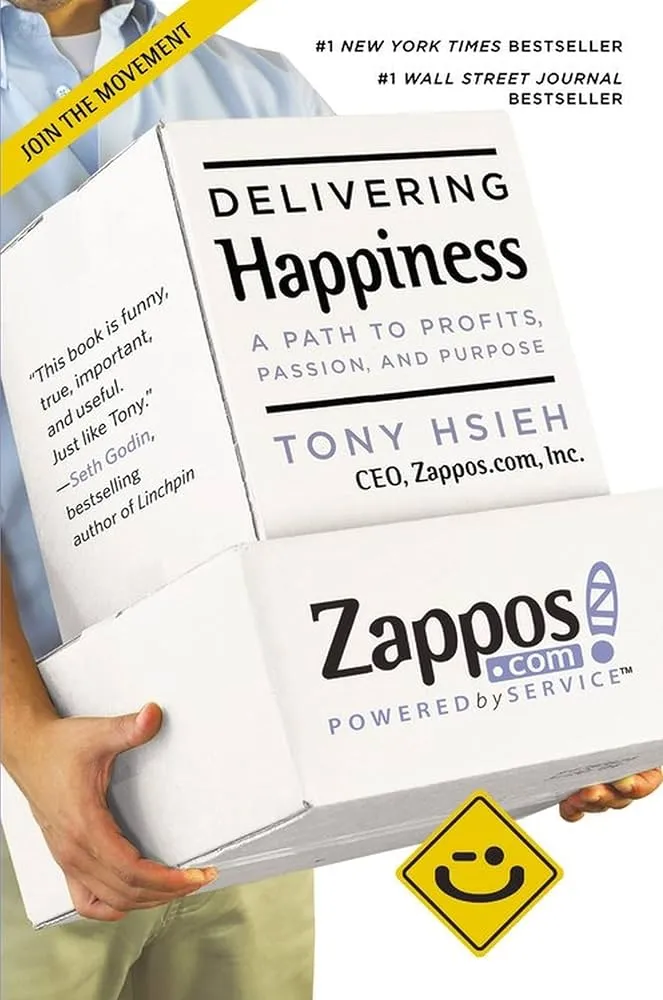
Building Sustainability Following “Delivering Happiness: A Path to Profits, Passion, and Purpose” by Tony Hsieh
General Topic
Tony Hsieh, Zappos' late CEO, built a $1.2 billion company by ignoring conventional perceptions. Where most retailers chased margins, he chased happiness for employees, customers, and vendors. The book chronicles his journey from selling LinkExchange to Microsoft (then realizing money alone felt empty) to creating Zappos' legendary culture.
The book introduces the "Happiness Framework" built on four pillars:
- perceived control → agents need autonomy over how they solve problems
- perceived progress → clear growth paths keep people motivated
- connectedness → support works best as a collaborative effort, not isolated cubicles
- and vision → everyone understands how their work creates meaning beyond closing tickets.
How EverHelp Follows It
What resonates with EverHelp is Hsieh's framework for sustainable success, where culture is at the core of operations. For us, this means investing in happiness first. Our teams have autonomy to resolve issues creatively without micromanagement. Career development plans give agents clear next steps. Regular team-building and open communication channels create genuine connection. And every agent knows their role: turning frustrated customers into loyal advocates for the brands we serve.
Hsieh's mantra, "customer service shouldn't be a department; it should be the entire company," drives our approach. We believe that support isn't an afterthought – it's the core offering. That mindset allows us to deliver WOW moments through consistent, empowered, human-first interactions and excellent customer service.
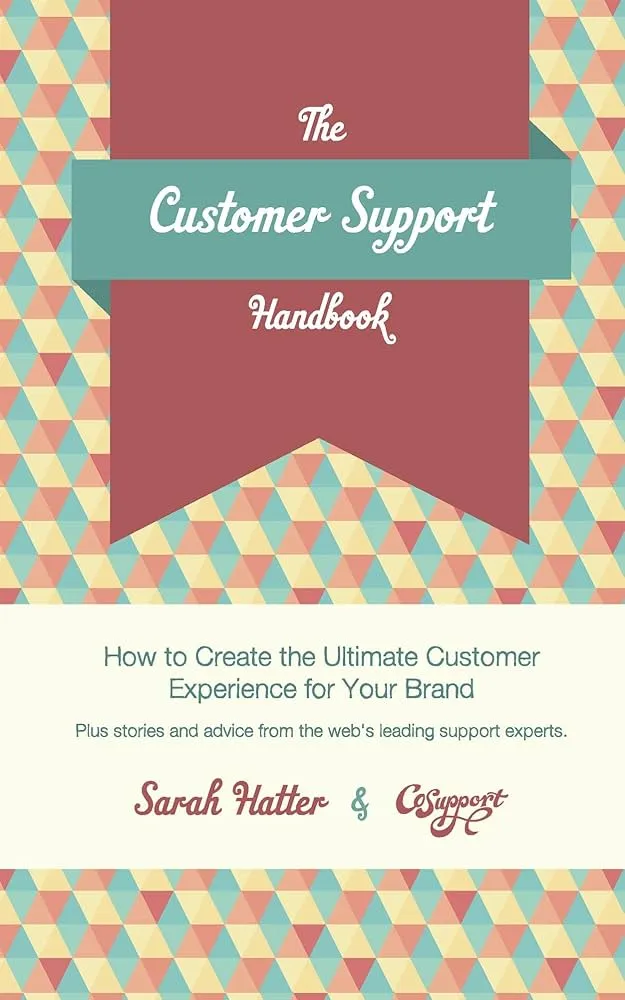
Following The Customer Service Culture Examples from “The Customer Support Handbook” by Sarah Hatter
General Topic
Sarah Hatter founded CoSupport after years of noticing a gap: most support training focused on technical processes, ignoring the human side. Her handbook, written with contributions from leaders at companies like UserVoice and Wistia, fills that empty space with practical, tactical advice on language, tone, hiring, and crisis management.
What makes the book valuable is how specific it is. Instead of vague advice about “being nice,” Hatter shows exactly what to say – with real examples, rewritten phrases, and clear do’s and don’ts. She breaks down why lines like “sorry for the inconvenience” feel robotic and how to respond in a way that actually sounds human. She also offers clear guidance on de-escalating difficult or abusive conversations without losing authority or empathy.
How EverHelp Follows It
Two of her ideas notably shaped how we work at EverHelp. First, empathy isn’t sympathy — it’s acknowledging frustration and clearly explaining what you can do. Second, support isn’t just about closing tickets. Support teams hear problems first, and that insight should flow directly into product and strategy decisions.
Overall, the book reinforces a simple truth our company holds: great support culture isn’t enforced from the top. It’s built when teams are trusted, trained, and empowered to treat customers like people, and Hatter gives us the tools to do exactly that.
How Do Companies Develop A Service Culture That Leads to Success
Reading books sparks ideas. Operationalizing those ideas into daily habits is harder. Zendesk provides a roadmap through its content on playbooks, team structures, and training, all designed to codify customer service culture so it survives turnover, growth, and market shifts.
1. Building a Customer-Centric Team Structure
How you structure your team shapes how people show up to work. When support is lumped into a generic operations bucket, agents often feel like an afterthought. But when teams are organized around customer journeys, skills, or product areas, people have clearer ownership and a stronger sense of purpose.
Zendesk recommends several models:
- Tiered support → L1 handles routine, L2 tackles complex, L3 resolves escalations;
- Product-based teams → each team owns a specific product or feature;
- Process-based teams → aligned to stages like onboarding, billing, technical support.
The right structure mostly depends on company size, product complexity, and customer needs.
What matters most is choosing a structure that reduces unnecessary handoffs. Research from "The Effortless Experience" shows that transfers frustrate customers more than almost anything else. When Zendesk teams adopt specialized structures, they pair them with shared knowledge bases and cross-training, so agents can resolve more issues without punting.
The structure also impacts retention. Remote customer service teams with clear career paths and growth opportunities see lower turnover. And if you want to follow Zendesk's practice of emphasizing people-first culture, it means you need to investing in agent development, not just customer tooling. According to industry data, call centers can see turnover rates reaching 44% per year, driven by low pay, high stress, and lack of advancement. Companies that build structured career ladders and recognize support as a revenue-driving function retain talent and deliver better experiences.
2. Training Soft Skills and a Service Mindset
Technical training gets agents operational. Soft skills make them effective. Zendesk's content on soft skills highlights the importance of empathy, active listening, clear communication, and problem-solving as cultural pillars for all support agents.
But how do you arrange soft skills training?
- Empathy training should start with perspective-taking exercises: agents role-play frustrated customers, listen to real call recordings, and discuss how different responses land emotionally.
- Following active listening workshops need to teach agents to pause, reflect, and confirm understanding before jumping to solutions.
- Clear communication practice mostly involves writing knowledge base articles, simplifying technical jargon, and adapting tone based on customer sentiment.
Teams can also be encouraged to build reading clubs, host lunch-and-learns for agents to discuss key concepts, and tie performance reviews to behaviors like reducing customer effort or demonstrating empathy in difficult interactions.
This mindset work pays off. Customer Satisfaction Metrics like CSAT and NPS improve when agents feel equipped to handle emotional complexity, not just technical problems. Proactive customer service becomes natural when agents internalize the idea that preventing issues beats reacting to them.
3. Operationalizing Insights into Structures, Playbooks, and KPIs
And if you still feel lost in all of these cultural frameworks and principles, you can just refer to Zendesk's customer success playbooks. They clearly translate abstract principles into concrete instructions. Each playbook includes:
- Objectives: What does success look like for this process or customer segment?
- Roles: Who owns each step? What authority do they have to resolve issues?
- Reference materials: Links to knowledge base articles, product guides, and escalation paths.
- Step-by-step instructions: Detailed workflows for common scenarios, from password resets to billing disputes.
The playbook approach scales culture. When a new agent joins, they don't absorb values through osmosis. They follow documented processes that embody those values, then gradually internalize the thinking behind them.
And proper KPIs reinforce those established behaviors. Instead of tracking only volume metrics like tickets closed per hour, Zendesk-influenced teams measure effort reduction (CES), satisfaction (CSAT), first-contact resolution, and repeat contacts.
Leaders can then review these metrics in regular retrospectives, and ask, "Where are customers working too hard?" and "Where are agents stuck?" Finally, customer feedback systems close the loop, ensuring that insights flow back into playbook updates, training adjustments, and product improvements.
{{cta}}
Results: How Cultivated Service Culture Shows Up in CX Metrics
Despite providing the necessary basis for smart business decisions, theory matters less than outcomes. And let us tell you, the culture-driven frameworks produce real results.
- Faster resolution, coming from unified data and smart routing.
Customers don't repeat their story across channels. Agents see full context and can solve problems in one interaction. Zendesk's AI capabilities now accelerate resolutions by 300% for teams that deploy them effectively.
- Fewer transfers, happening when teams adopt specialized structures but pair them with comprehensive training.
Agents know when to escalate and when to stretch their skills. Research shows that 52% of customers expect their queries resolved within a day, and teams that hit that mark see loyalty spikes.
- More personalized support becomes possible when agents have time and tools to treat customers as individuals.
Zendesk's tagging, segmentation, and customer history features let agents reference past interactions, preferences, and pain points, creating continuity that feels like a relationship rather than a transaction.
- The cumulative effect shows up in retention and revenue.
According to Zendesk's data, 3 in 4 consumers will spend more with businesses that provide a good CX, and 61% would switch to a competitor after just one bad experience. As such, companies with strong customer service culture not only avoid churn, but turn satisfied customers into advocates who drive organic growth through word-of-mouth.
All you need to reach the same outcomes is to be intentional. Successful Consumer Service Companies differentiate themselves through consistent execution of core principles: reducing effort, giving agents space, measuring what matters, and iterating based on feedback.
Teams that commit to these practices see great service become their default. Agents feel empowered. Customers feel valued. Metrics improve. And that's the return on investing in service culture.
You might like: Freshdesk vs Zendesk. Who wins?
Bringing Book-Driven Service Culture to Life
Zendesk's success isn't just about its software. Moreover, we think the biggest part of it comes from the company recognizing that customer service culture is a strategy, and that strategy gets stronger when it’s based on customer service books and implemented into the real life. “The Effortless Experience” emphasized low effort, “Customer Experience 3.0” showed how technology supports consistency, and “The Customer Manifesto” reminded us business is personal. For support leaders, the lesson is clear: codify values into behaviors, structure teams around customer needs, train soft skills, and measure outcomes that matter
EverHelp's support experts understand this philosophy. We've studied the same books, built playbooks around similar principles, and delivered results for clients who need more than bodies answering phones. If you're ready to transform your support operation into a customer service culture that retains talent and delights customers, book a meeting with our team. Let's discuss how to build a customer support team that reflects these values and delivers real outcomes.
FAQ
Why analyze customer service books to understand these companies?
Books showcase the philosophies and frameworks that drive successful service cultures. When companies like Disney, Zappos, and Nordstrom document their approaches, they're exposing the strategic thinking behind their reputation. Reading these works lets you break down proven models and adapt their principles to your own business, saving years of trial and error.
If I'm a startup with limited resources, which reading path should I follow?
Start with "The Effortless Experience" for efficiency-focused fundamentals, then "The Service Culture Handbook" by Jeff Toister for building culture, even without huge investments. These two prioritize low-effort improvements over expensive initiatives. Skip Disney and Ritz-Carlton case studies initially – they're aspirational but resource-intensive, especially for early-stage teams.
Which customer service books are best for improving metrics like CSAT and FRT?
"The Effortless Experience" directly addresses reducing customer effort, which research shows impacts CSAT more than delight. Lee Cockerell's "Creating Magic" provides actionable rules for consistent service delivery. Both focus on operational efficiency and reducing friction points, which are the two factors proven to move satisfaction and response time metrics most significantly.
Which books are best for reducing agent burnout and improving team morale?
Jeff Toister's "The Service Culture Handbook" confronts burnout head-on with featured research showing 59% of contact center agents are vulnerable. Tony Hsieh's "Delivering Happiness" emphasizes employee satisfaction as the foundation for service excellence. Both reject metric obsession in favor of empowerment, recognition, and creating supportive environments where agents actually want to work.
How many of these customer service books should my leadership team actually read?
Two to three should be enough. Pick one foundational text ("The Effortless Experience" or "Delivering Happiness"), one culture-building guide ("Service Culture Handbook"), and one industry-specific case study. More than that creates analysis paralysis. Better to deeply implement insights from fewer books than superficially skim many and execute nothing.
Are these customer service books still relevant with AI changing support?
Absolutely. AI handles transactions while humans are still in charge of relationships. And if you feel like the standard books already seem irrelevant, you can check out more modern materials like "The AI Revolution in Customer Service and Support" (2024). Yet, classics remain vital because they teach empathy, escalation judgment, and culture-building, all skills AI can't replicate. The technology changes, but the human elements that build trust don't.
How does Everhelp use customer service books in agent training?
EverHelp uses customer service books as a foundation for practical training, not as required reading. Key ideas from leading books are distilled into hands-on lessons inside EverHelp Academy, where agents learn how to apply them in real support scenarios. Our managers are also encouraged to exchange insights and learning recommendations through the Support Management Community, organizing events, and writing expert content to keep training relevant. Such an approach allows our agents to gain actionable skills from proven frameworks without spending time on theory that doesn’t translate to day-to-day work.


Table of contents
Help someone else stay in the know. Hit that share button!




.webp)


.webp)

%20(1).png)










.webp)
.webp)
%20Rate%20Smartly.webp)

.webp)


.webp)




.webp)

.webp)