







Agentic AI for travel, built for the moments that matter
We handle up to 85% of your traveler conversations automatically. Your team focuses on the moments that need real human judgment, with full PNR context on every escalation.








AI impact you can measure on every itinerary
time
resolution rate
CSAT
Three travel CX problems, solved by AI
Travel CX breaks at three predictable moments. For each one, here's the workflow our AI handles end-to-end, so your team only touches what genuinely needs human judgment.
Pre-trip: Booking & revenue management


Disruption: IROPs (Irregular Operations)
Post-trip: Refunds, loyalty & retention
Pick your automation level
The more systems your AI can access, the more it can resolve on its own. Pick the tier that matches your stack and your appetite for automation, and we'll calibrate the rest with your team.
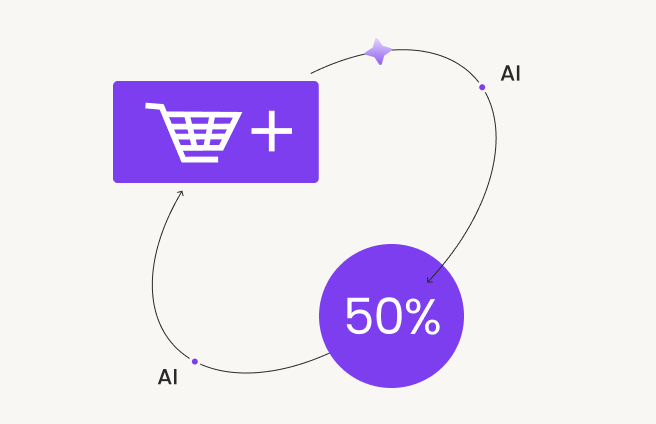
50% automation: FAQ + triage
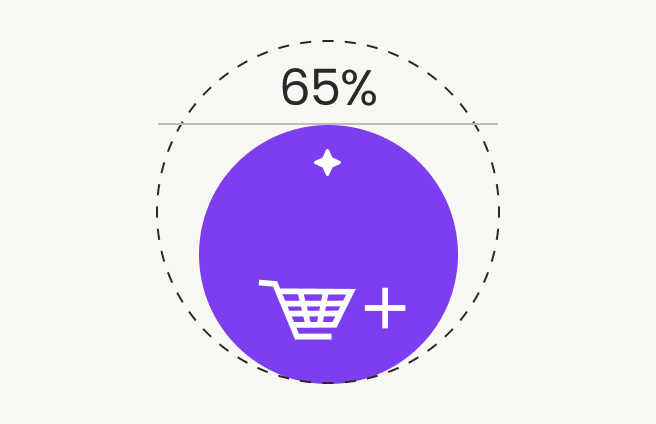
65% automation: Live data + booking changes
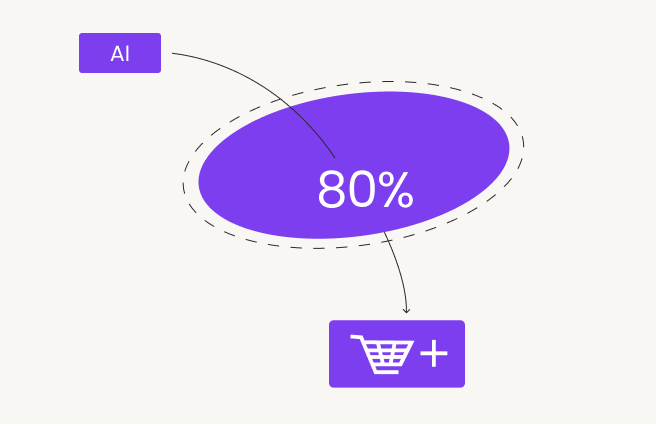
80% automation: Full agentic mode + Human-in-the-Loop
What our clients actually achieved

.webp)

.webp)

.webp)

.webp)



.webp)

.webp)

.webp)

.svg)


Tell us your peak volume

Why travel brands choose EverHelp AI
We built our travel AI agent on 43 Evly deployments and over 100,000 real support interactions. It plugs straight into the GDS, PSS, and CRM tools your team already runs, so you don't rebuild your stack to deploy it.


Here’s why clients love EverHelp













agents
time to hire






Plug into your existing travel stack
If you're already running Amadeus, Sabre, Salesforce Service Cloud, Zendesk, or a custom OBE, you don't have to rebuild anything. We slot in.










We protect your travelers' data at every touchpoint
Passenger data and payment information demand the highest standards. That's why we built compliance into every layer of our infrastructure from day one.

AI travelers trust, on infrastructure, your security team approves
CRM, with go-live in about 28 days.
FAQ
Got questions? We’ve got answers. Let’s clear things up.
How do you prevent 'hallucinations' in pricing or hotel policies?
Hallucination risk is the most common concern we hear from travel ops leaders, and it's the right concern to have. Three controls, applied together, eliminate it in our deployments:
- Grounded retrieval, not generative guessing. Every fare, fee, and policy answer is pulled live from your fare engine, GDS routing rates, or rate-loaded knowledge base. The AI does not invent numbers.
- Closed-set responses for pricing. When a traveler asks, "How much is a change fee for IROPs (Irregular Operations) on this PNR?", the AI quotes from the live rule, not from training data.
- Confidence thresholds and escalation. If the AI is below threshold on any policy or rate question, it either confirms with the traveler or escalates with full context. It never fills the gap with a plausible-sounding answer.
This is one of the seven lessons we documented across our 43 Evly deployments. The full breakdown of guardrails and how to apply them is in our AI in Customer Service handbook.
What about our PII and payment data – is EverHelp secure?
Yes, and we enforce it at every layer of the stack, not just the front end. Card numbers and sensitive PII are tokenized at ingestion, before they ever touch agent or AI surfaces. All connections to your GDS, PSS, payment provider, and CRM run over encrypted channels with role-based access controls, so the AI sees only what it needs to resolve the case, nothing more.
Our three compliance pillars (PCI DSS, GDPR, and ISO 27001) are continuously audited rather than stamped at a single point in time. For the full security commitment, including how we handle chargebacks on disputed travel transactions, read our security & safety overview.
How do we ensure AI stays within our specific hotel or airline brand voice?
We configure, monitor, and continuously correct brand voice. It's not a one-time setup. We train the AI on your SOPs, fare rules, IROP playbooks, and loyalty policies, not a generic travel template, and we explicitly define tone, vocabulary, prohibited phrases, signature lines, and apology depth to enforce them at generation time.
For brands operating across markets, the AI adapts register and formality to the traveler's locale, not just the language (more on why this matters: global cultural standards and personalization). To keep it accurate over time, we review a continuous sample of AI conversations against brand-voice rubrics and feed corrections back into the model weekly.
This is exactly the hospitality peak season playbook we've refined across hotel groups, OTAs, and carriers.
What is the 'Human-in-the-Loop' protocol if a guest becomes frustrated?
We detect frustration rather than wait for it. We score every message on emotion, urgency, and intent, so a drop below the configured threshold triggers immediate handoff before the traveler asks for a human.
Specific phrases like "I want to cancel everything", "I'm going to dispute this", or "this is unacceptable" route directly to a senior agent rather than the next-available queue. And when the agent picks up, they see the full transcript, sentiment timeline, PNR, tier, and AI confidence summary, so the traveler doesn't repeat anything.
This is the core of our human + AI model, and it's why our CSAT stays above 83% even during IROPs.
How does EverHelp handle data privacy and secure payments (PCI Compliance)?
We're PCI DSS and GDPR compliant, and ISO 27001 certified. Concretely, that means:
- We tokenize card data, so full numbers are never stored or displayed to AI or human agents.
- All session recording and screen-sharing run over encrypted protocols.
- We use role-based access, so every agent and every AI workflow sees only the minimum data needed to resolve the case.
- We run annual third-party audits across all three frameworks, with quarterly internal reviews.
- We align documented retention policies to your jurisdiction and your legal team's requirements.
For the operational implications, including how PCI compliance reduces refund friction and protects SLAs on disputed transactions, see the linked guides.
Which channels does the AI support, and how does it maintain service quality across 95+ languages?
This question gets at the fear most travel CX leaders carry: fragmented CX, where the experience falls apart between web chat, the call center, and social DMs.
Our agentic AI runs on a single conversation graph across:
- Voice (call center, IVR replacement)
- Live chat (your site, OBE checkout, app)
- WhatsApp, Telegram, Facebook Messenger, iMessage, SMS
- Social (X/Twitter, Instagram DMs, Facebook)
Full context, including PNR, tier, sentiment, and intent, moves with the traveler across channels, so they never re-explain themselves. On language quality, we support 95+ natively with cultural-nuance detection that adapts tone and formality beyond literal translation.


